 modernView artwork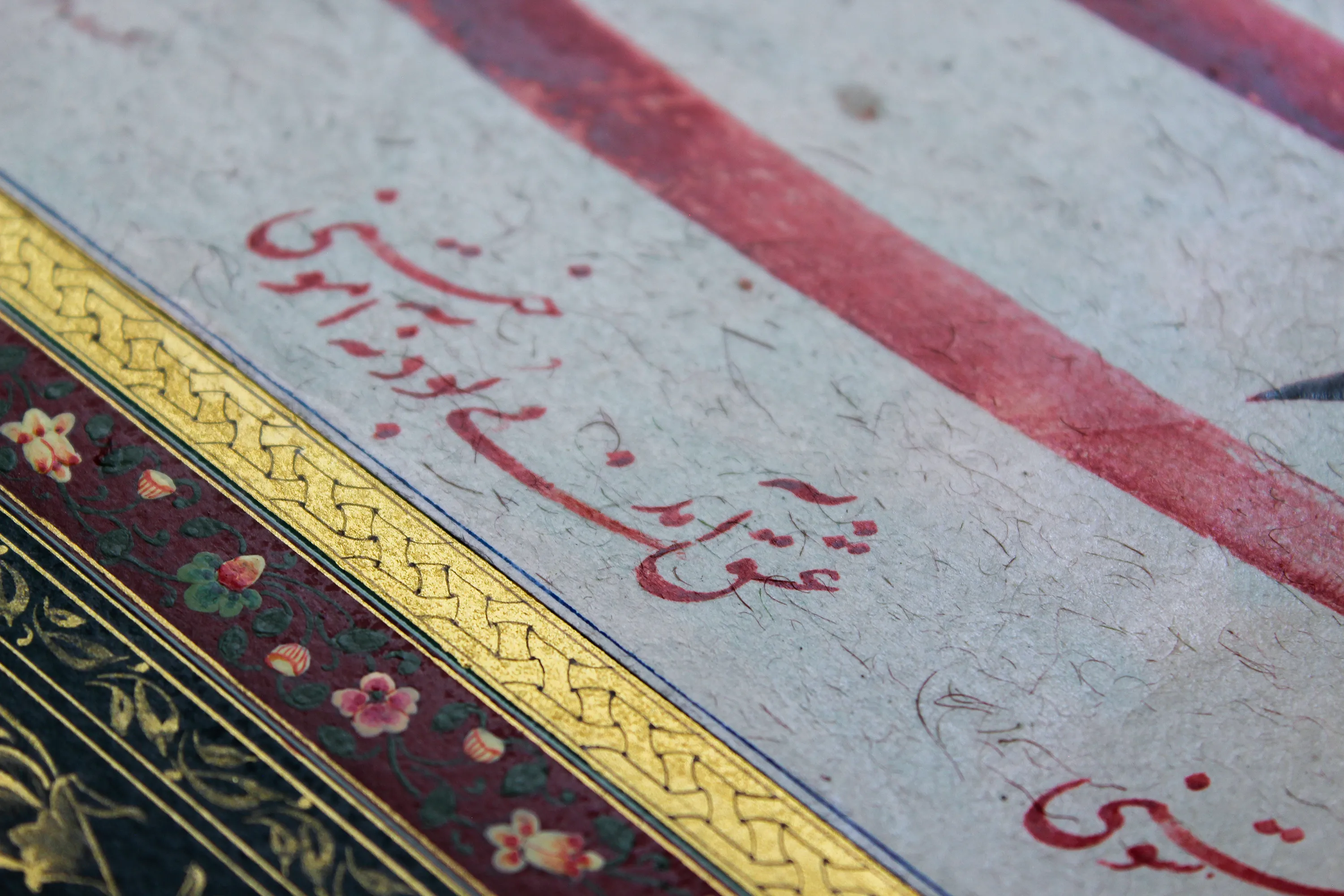
Persian Calligraphy
Nasta'liq
The Continuation of a Culture.
On this website, we seek to explore Nastaliq through its forms and history, and from within that tradition, to find a way of connecting with the heritage of Iranian art in our time. I am Ali Bagheri, and I invite you to join us in this space dedicated to art.
01
Artist's Perspective
Nasta'liq artistic identity
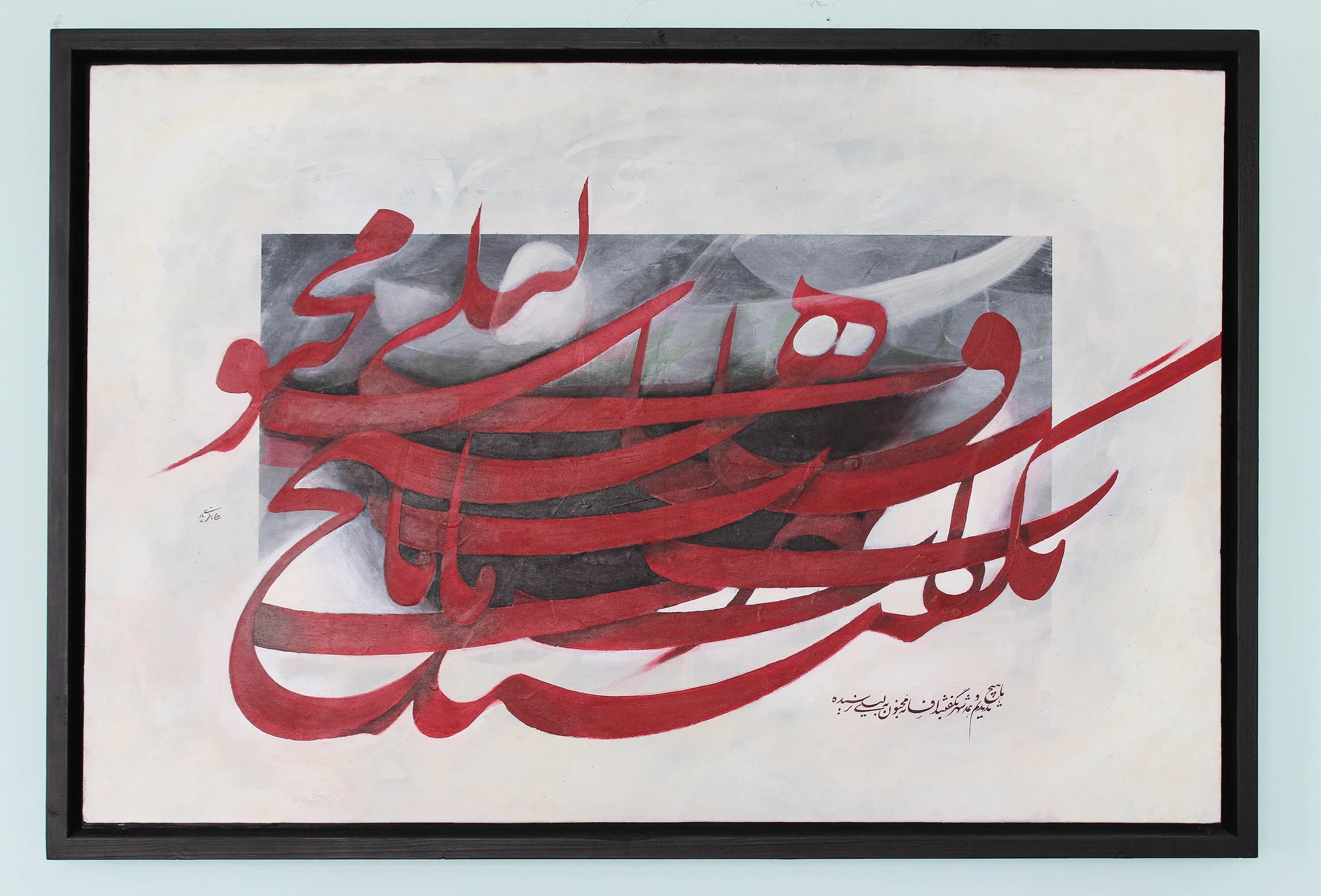
For me, calligraphy is not simply beautiful writing; it is a way of experiencing form, movement, silence, and meaning. Nastaliq is rooted in the heritage of Iranian art, yet every movement of the pen creates the possibility of a new experience. In my work, I try to find a balance between structure and freedom, tradition and personal experience, line and color. Sometimes this path continues through classical Nastaliq, and at other times through calligraphy painting, freer forms, and new visual explorations. What matters to me is maintaining a connection with the roots of Persian calligraphy while continuing to search for a personal language through which to express the experience of the present.
“Calligraphy is a kind of music, not for the ears, but for the eyes.”
V. Lazursky
02View all works
Selected Works
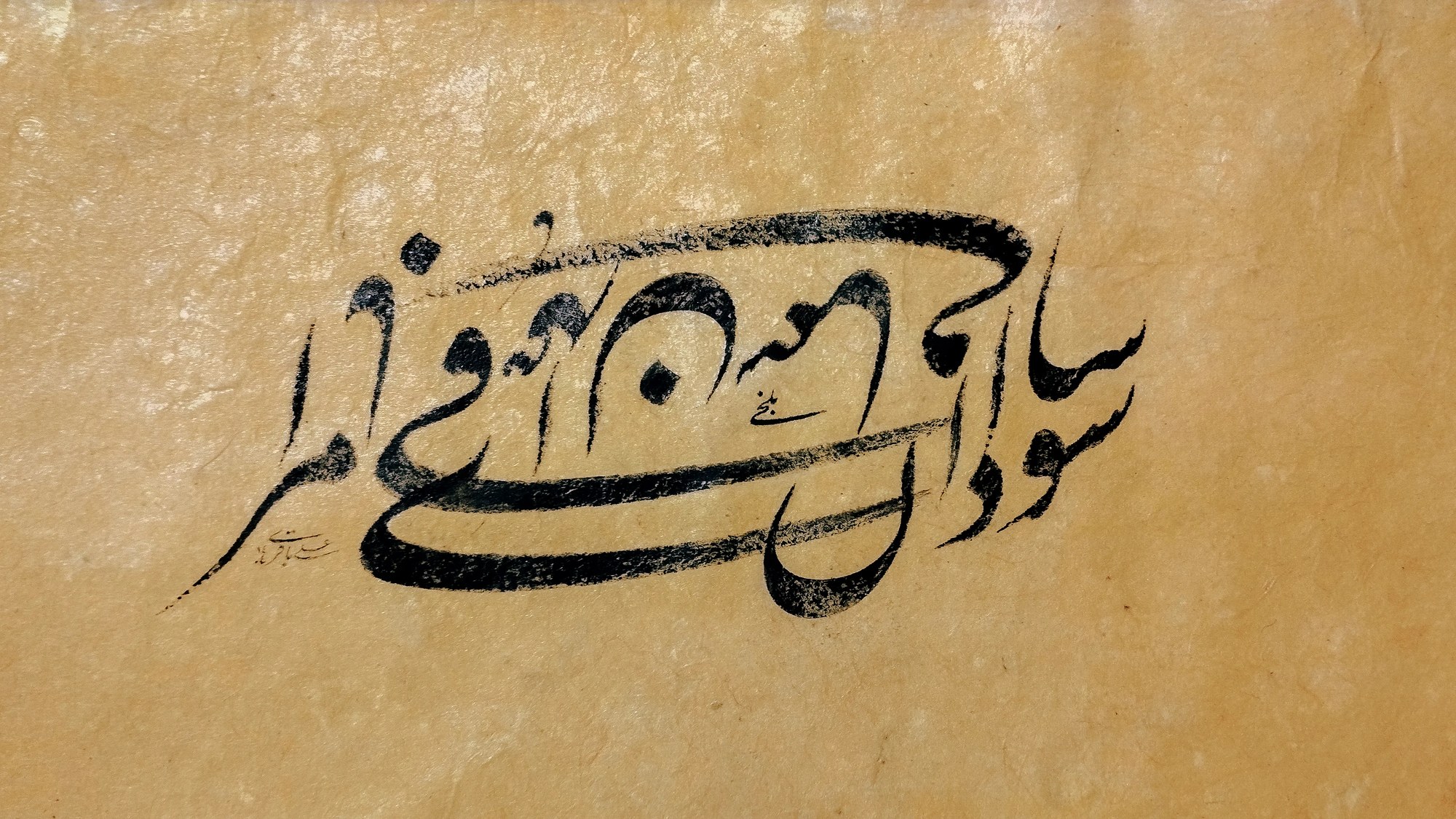
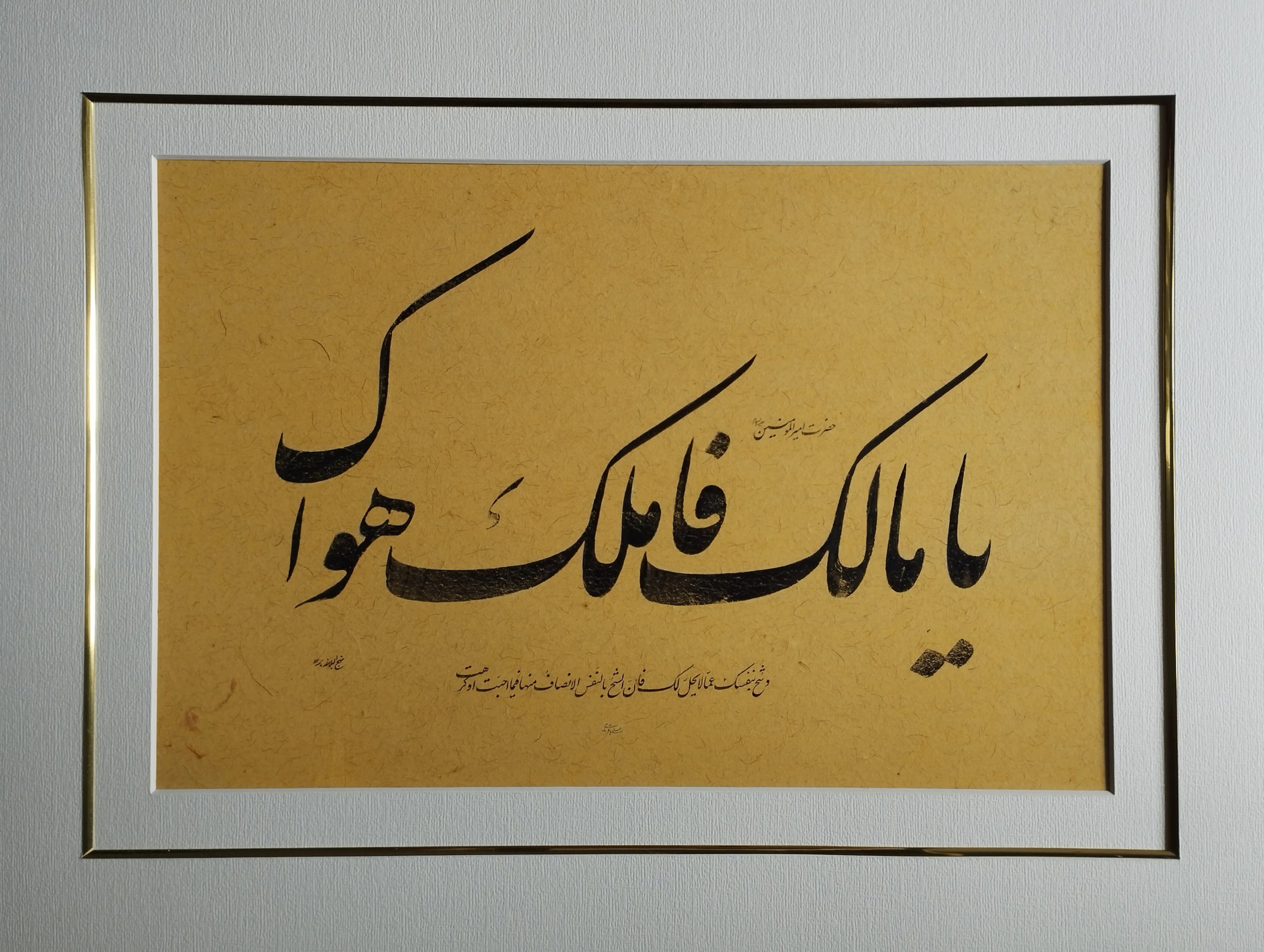
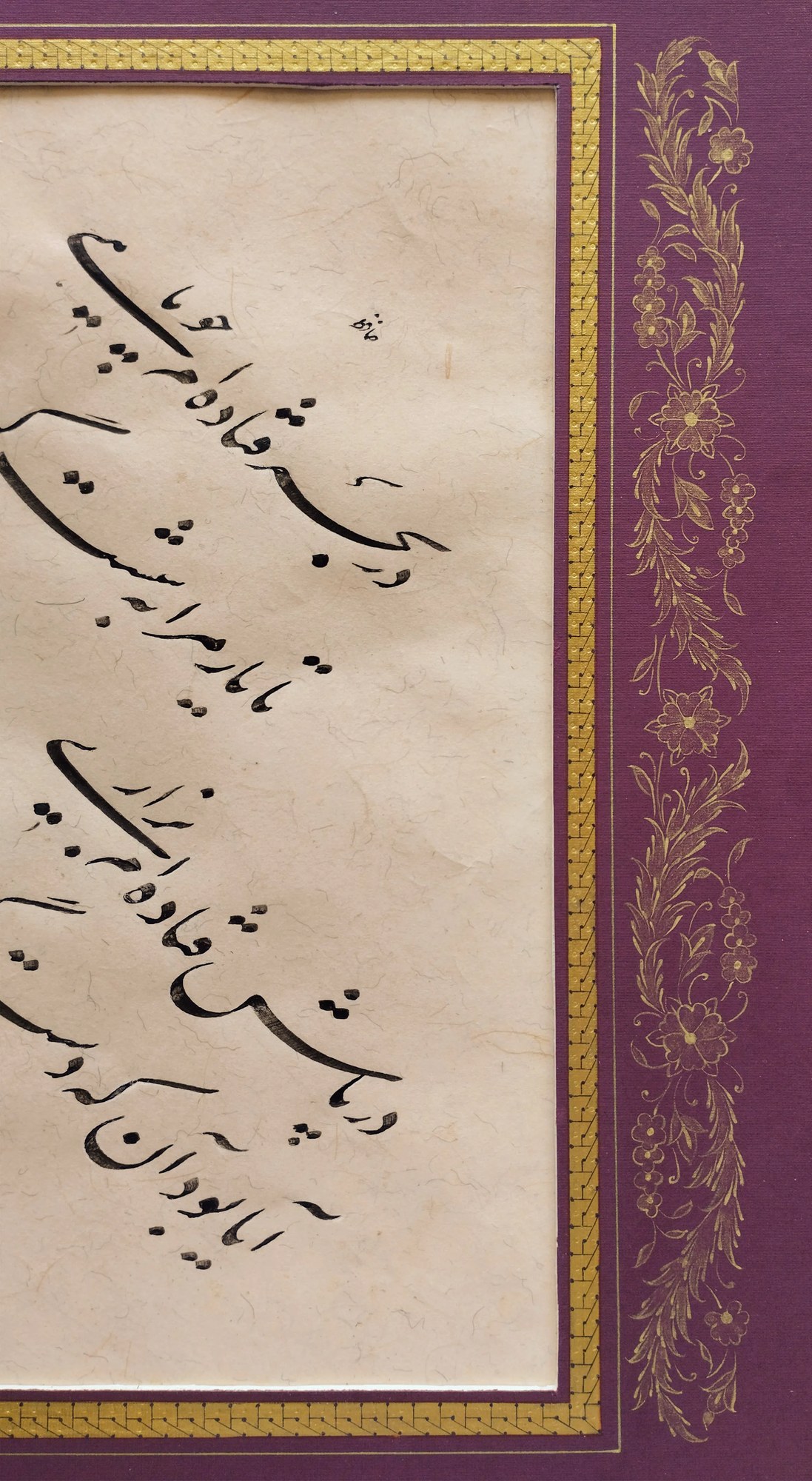
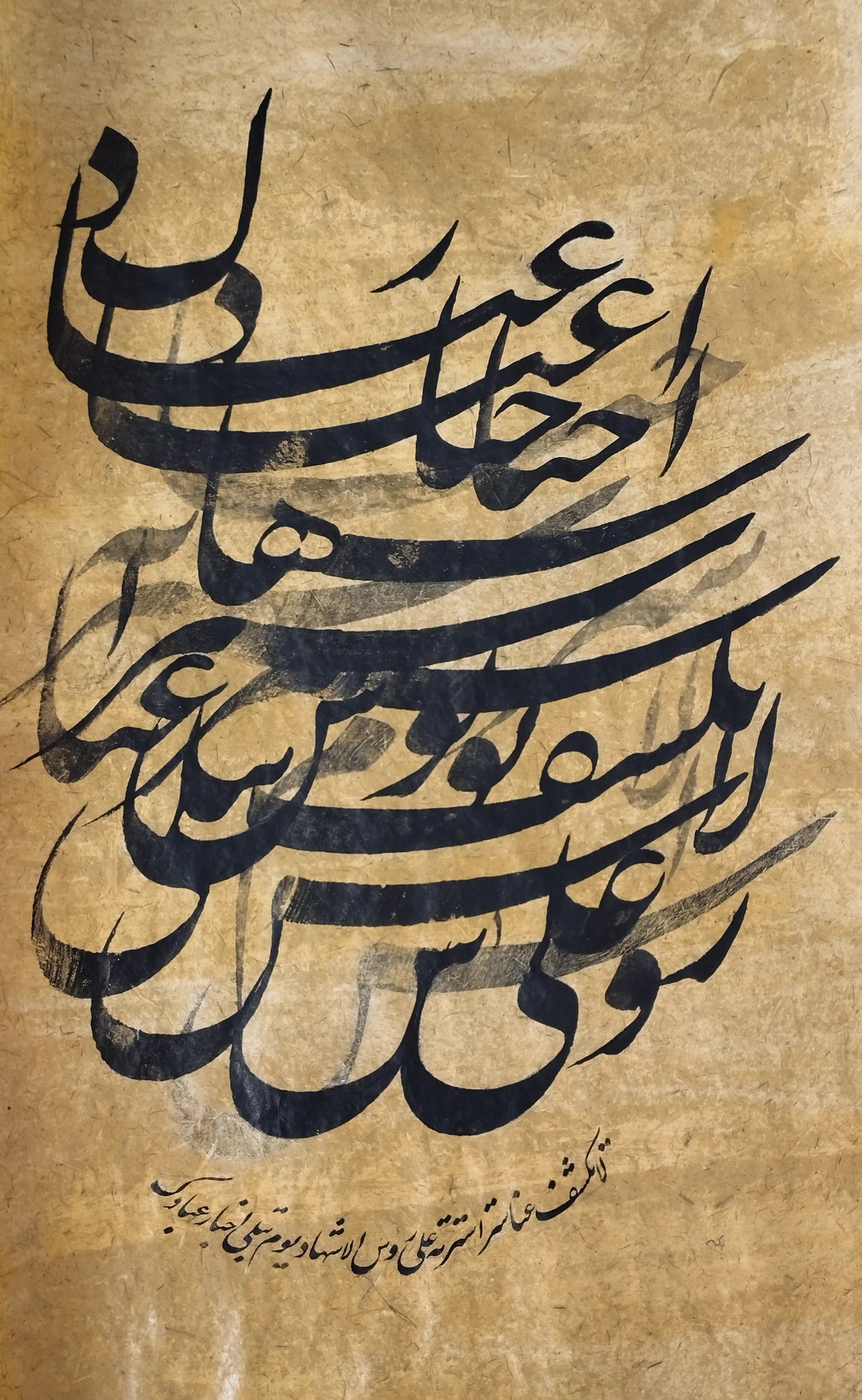
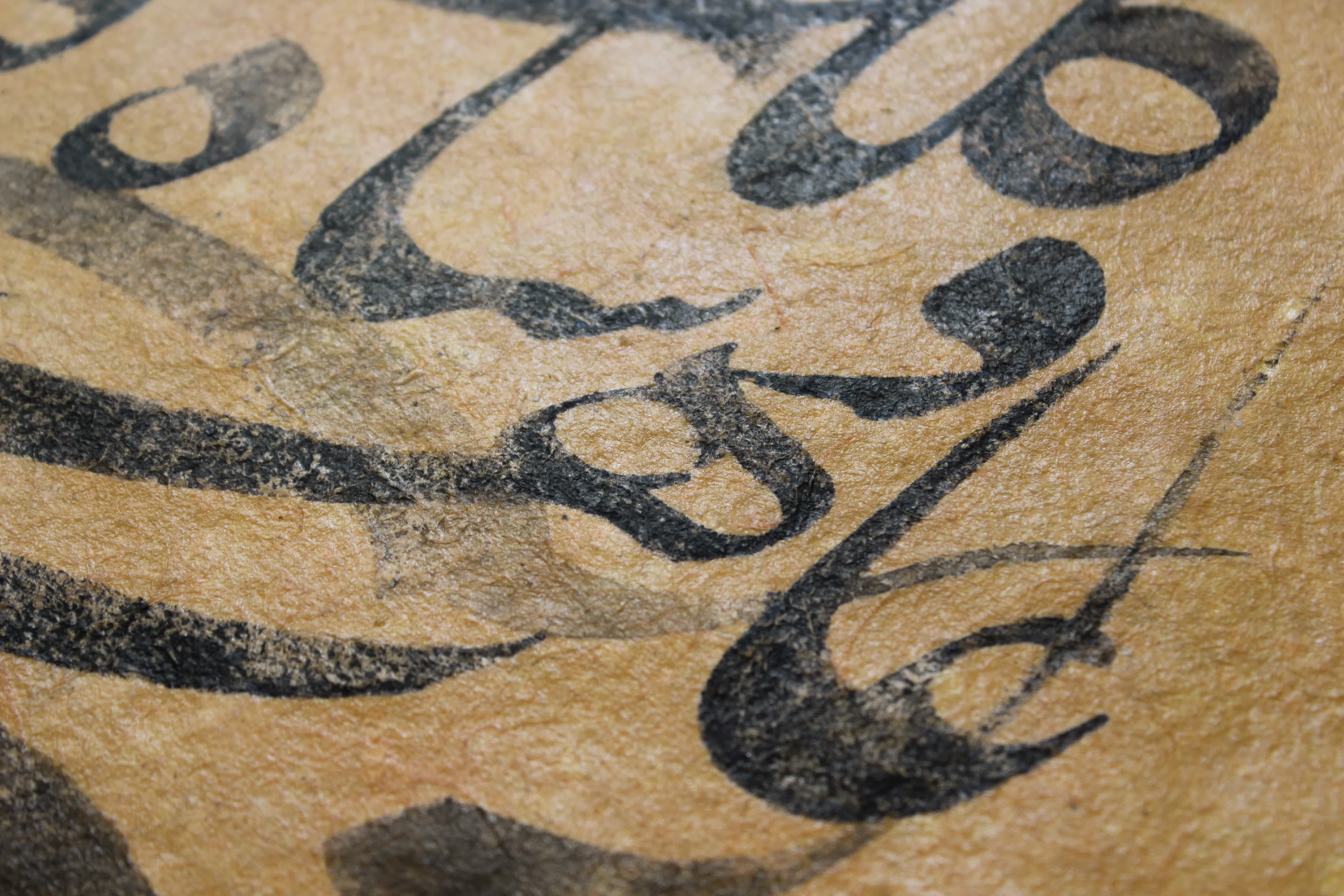
A selection of Ali Bagheri’s works in Persian calligraphy, Nastaliq, and calligraphy painting
03
Heritage of Iranian Art
Nastaliq; Part of Iran’s Visual Memory
Nastaliq is one of the most significant expressions of Iranian art and culture; a visual language shaped over centuries through its close relationship with poetry, literature, manuscript arts, and the cultural life of Iran. For me, working with Nastaliq is not simply the continuation of a historical tradition. Understanding this heritage is the starting point for exploring form, proportion, the movement of the pen, and new possibilities of artistic expression. Preserving this heritage becomes meaningful when knowledge of the past can enter into dialogue with the experience and perspective of the present.
05Articles
Writings & Research
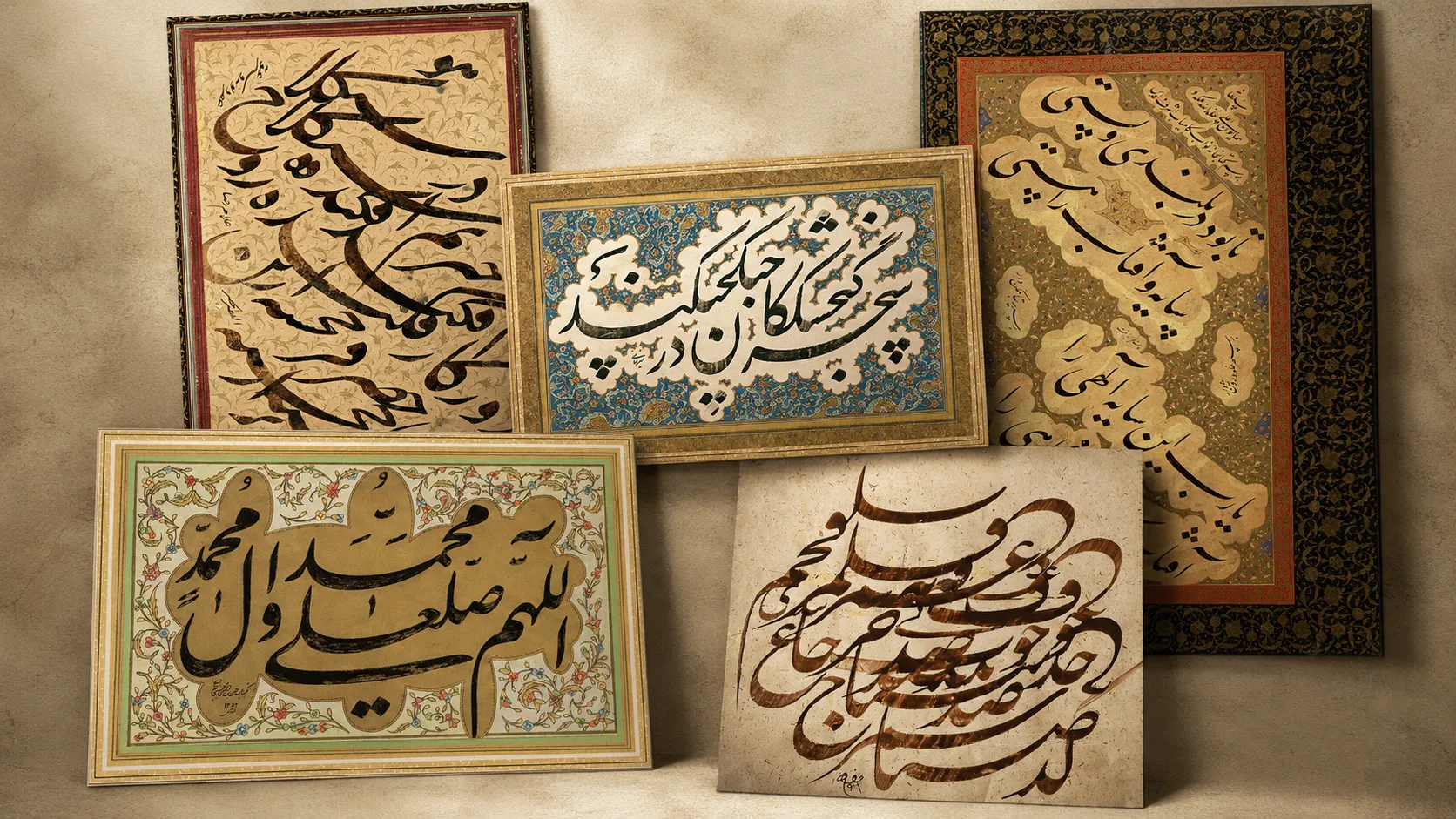
Essays and research on Persian calligraphy, Iranian art history, Nastaliq, teaching, and the experience of artistic creation.
Articles
 01
01Calligraphy Research and Studies
From Manuscript Copying to Siyah Mashq: The Main Formats and Forms of Nastaliq Works
Kitabat, qit'a, chalipa, siyah-mashq, and muraqqa' are not fully separate Nastaliq formats. Each reflects a layer of production, arrangement, function, or material history. One work may therefore carry several valid labels and should be read in layers.11 min readRead
 02
02History and Heritage of Calligraphy
Why Is Nastaliq Called an “Iranian Script”?
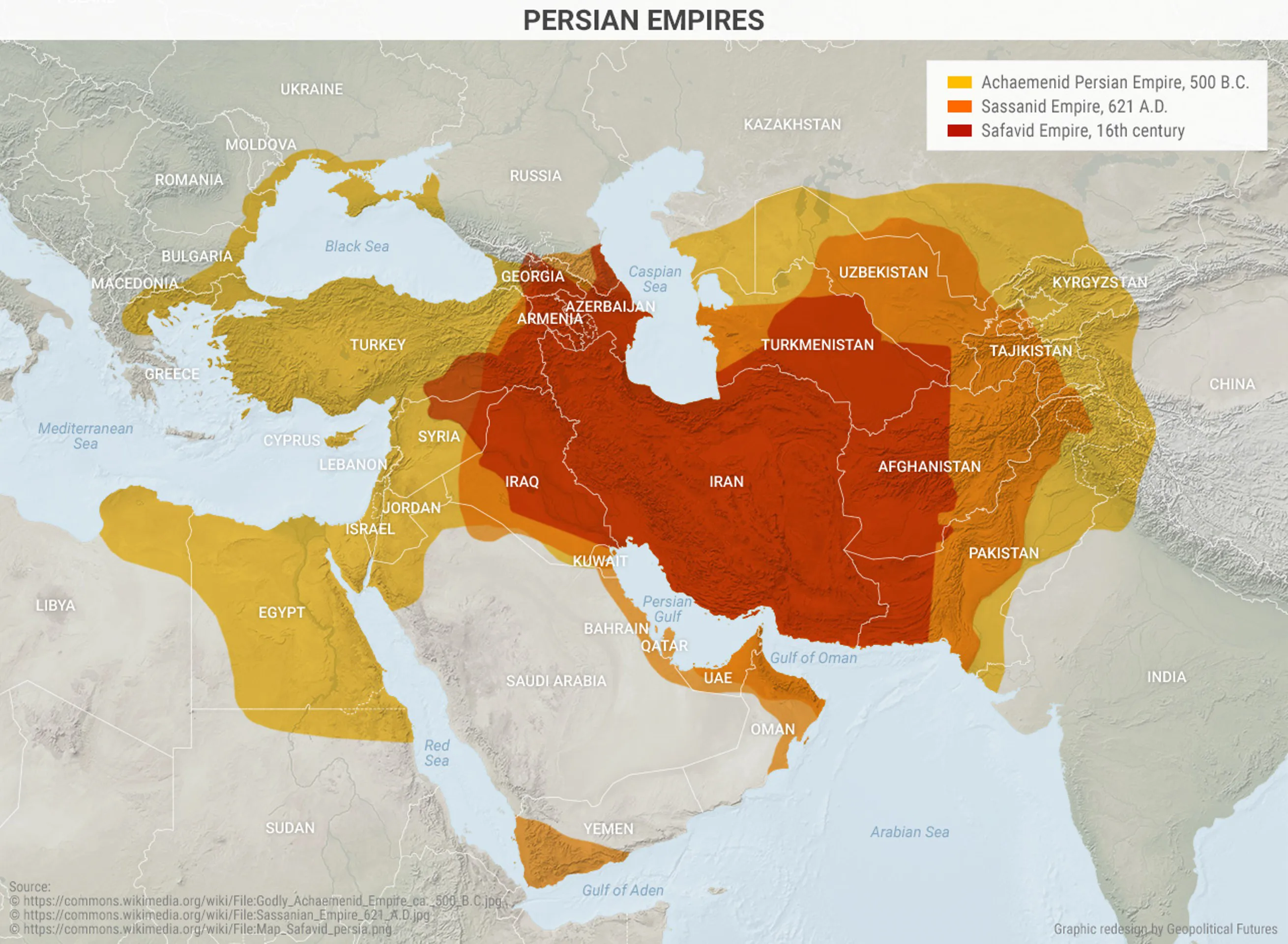
Nastaliq emerged from Iran’s historical culture in close connection with Persian language and literature, then spread over centuries to Herat, Bukhara, India, Urdu culture, and the Ottoman world. It is best understood as Iranian in origin and transnational in history.13 min readRead
 03
03article
Nastaliq and Persian Poetry: How Did Calligraphy and Literature Shape Each Other?
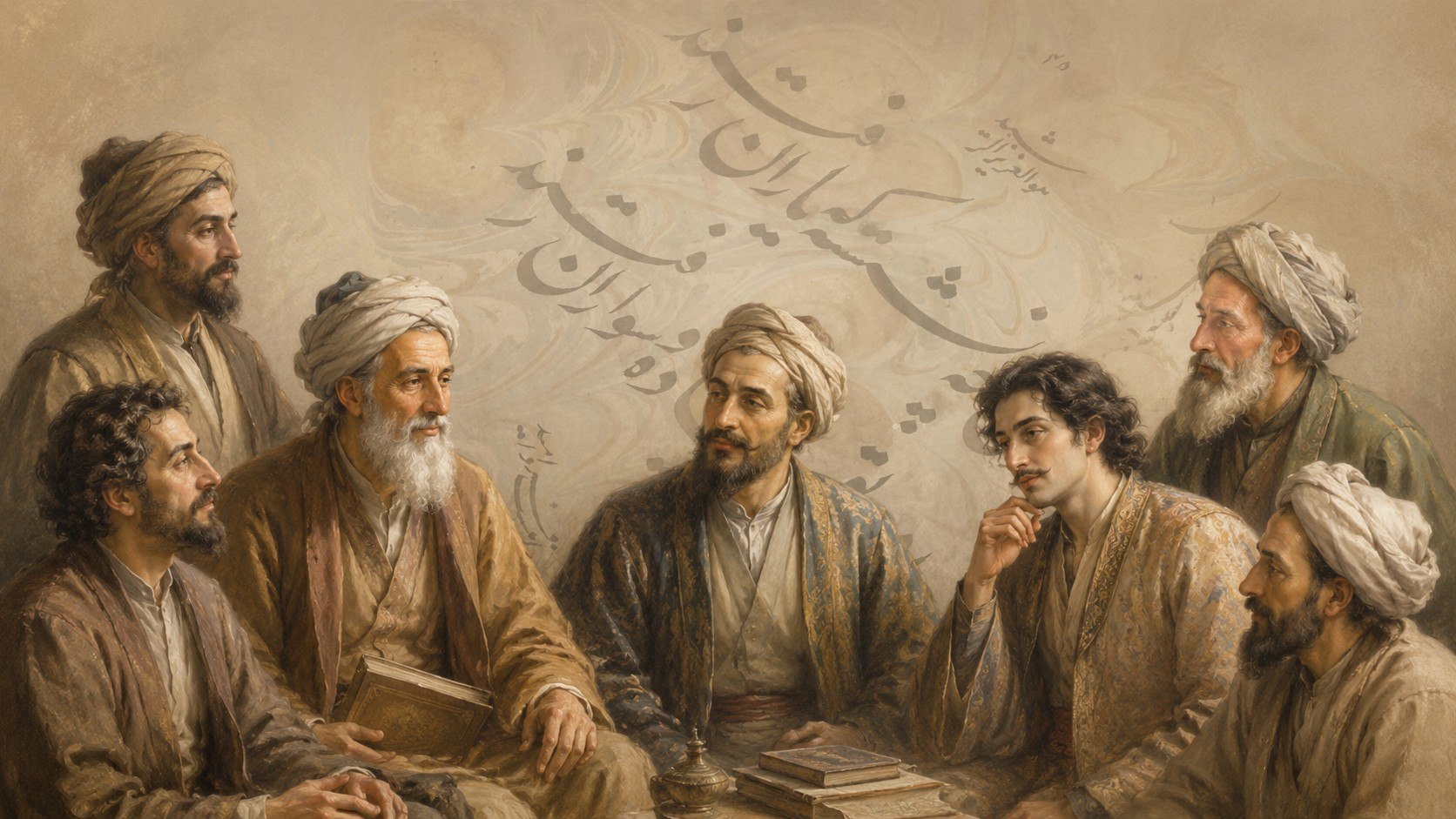
Nastaliq and Persian poetry shaped each other over centuries. Nastaliq changed how poetry was seen and arranged, while poetry offered calligraphers new possibilities of composition and expression. Their bond is deep, but neither inherent nor exclusive.14 min readRead
Continue the Journey
Explore the World of the Works
Each artwork is part of a continuing journey, from classical Nastaliq and Persian calligraphy to calligraphy painting, color, and freer explorations of form...
View Works