MÄh-e Man Sho â Be My Moon
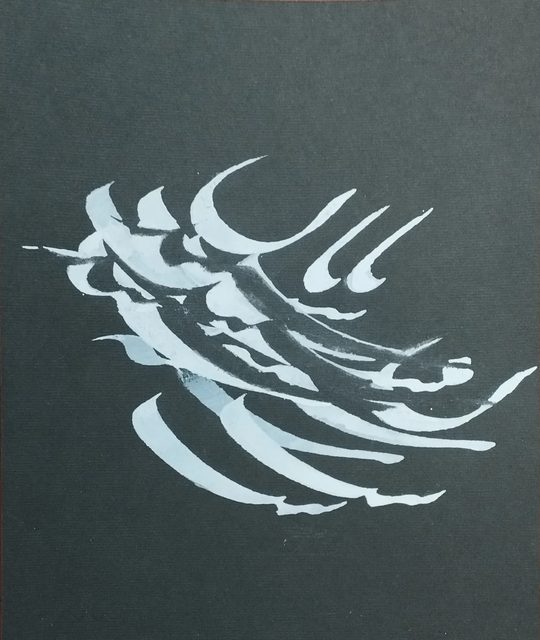
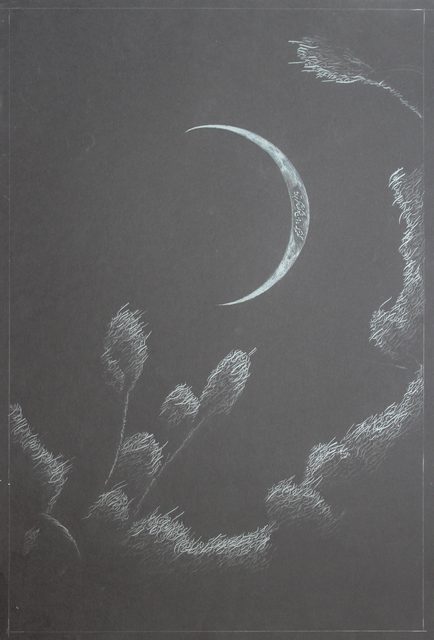
âMÄh-e Man Shoâ is shaped around a line by Hafez. Against a dark field, a luminous crescent emerges among delicate, scattered traces of calligraphy, creating a quiet and suspended presence.
Curated collection
A curated view of original paintings and calligraphy.
âMÄh-e Man Shoâ is shaped around a line by Hafez. Against a dark field, a luminous crescent emerges among delicate, scattered traces of calligraphy, creating a quiet and suspended presence.
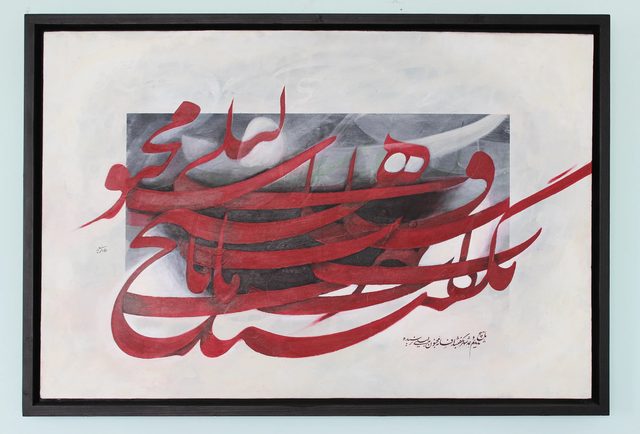
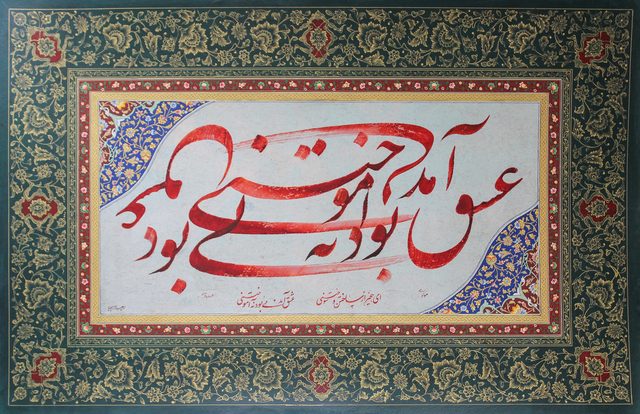
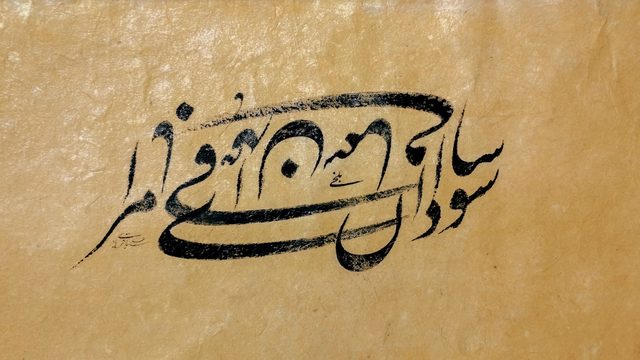
âAfsaneh-ye Majnunâ is built around a verse by Saadi, combining red calligraphy with pale, luminous forms that evoke the story of Layli and Majnun through color and composition.
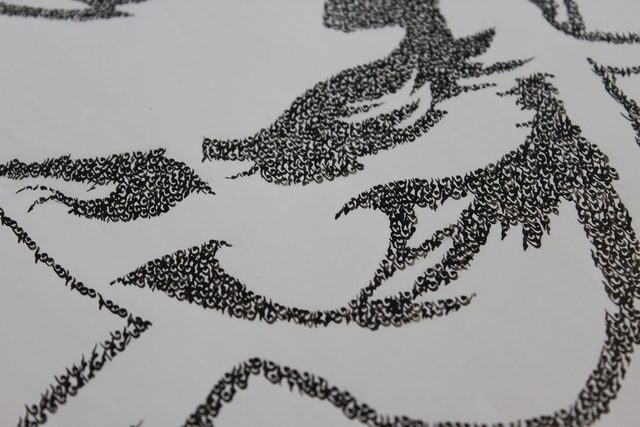
âLabkhandâ is a portrait constructed through repeated forms of the name âQasem.â Variations in density shape the contours of the face and gradually reveal the expression of a smile.
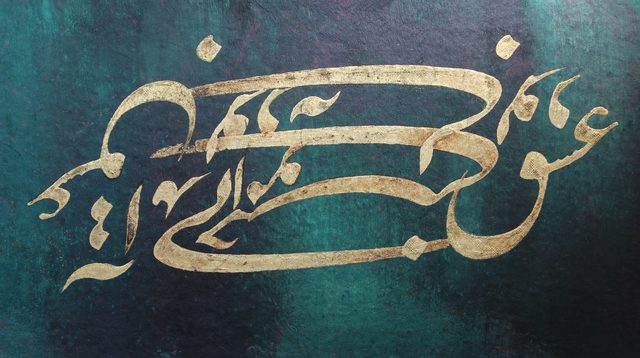
âShafaqâ is a calligraphic composition based on Rumiâs line âLove is something that comes, not something learned.â Long golden strokes extend across a deep green and dark background, making the calligraphic form the central presence of the work.
âAsheghâ emerges from a search for the idea of love within cycles of repetition and human experience. Its twisting, continuous form moves the word beyond direct reading and turns it into a visual structure.
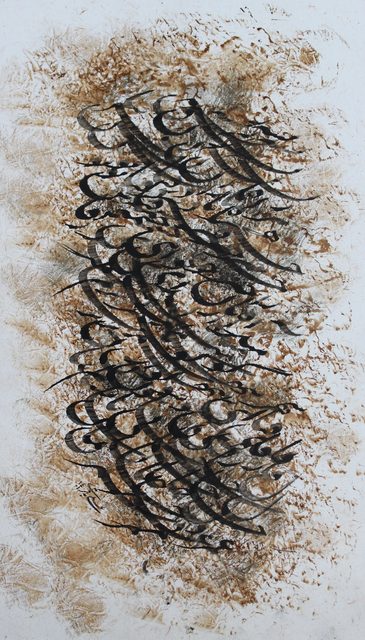
âPayizâ was inspired by fallen leaves along Valiasr Street in Tehran. Black calligraphic lines and layers of brown create a dense yet scattered surface that evokes ground covered with autumn leaves.
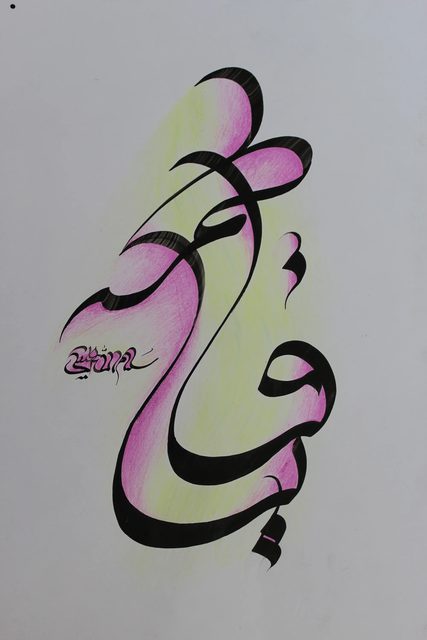
âFatemehâ moves away from the familiar structure of Nastaliq and takes inspiration from a burning candle. The name of Fatimah al-Zahra is transformed into an elongated, fluid form shaped by black lines and soft pink shading.
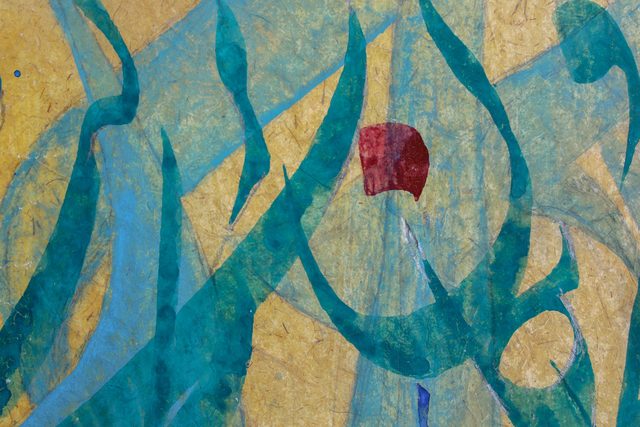
âVladimirâ is a horizontal composition built from large, continuous calligraphic forms in shades of green, blue, and turquoise against a warm-toned background, creating a sustained rhythm across the work.
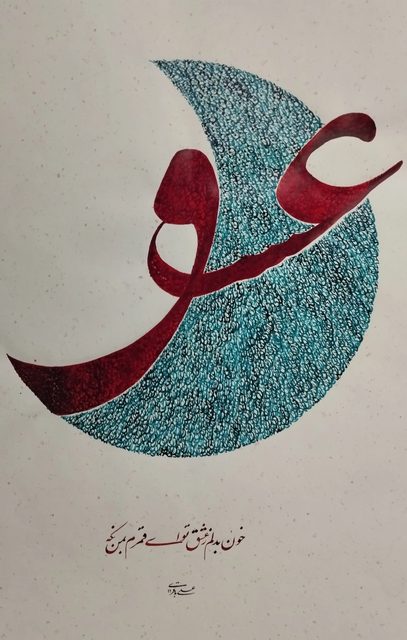
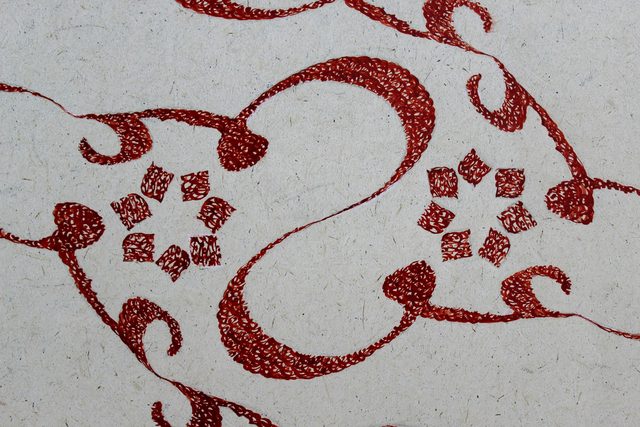
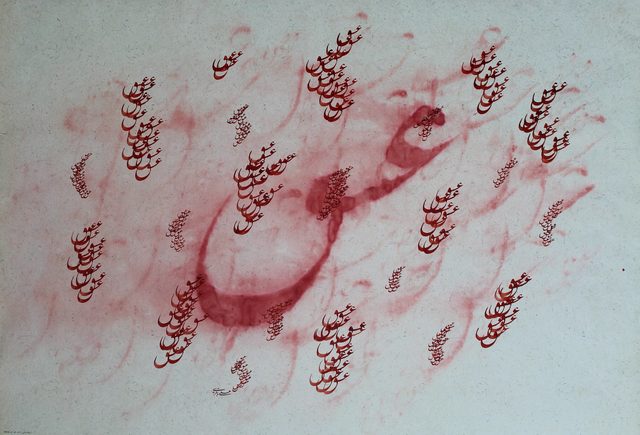
âAngurâ takes shape through the repetition of the word eshq (âloveâ) and draws inspiration from the deep red color and clustered structure of grapes. Here, the written word moves beyond legibility and becomes a unit for constructing form.
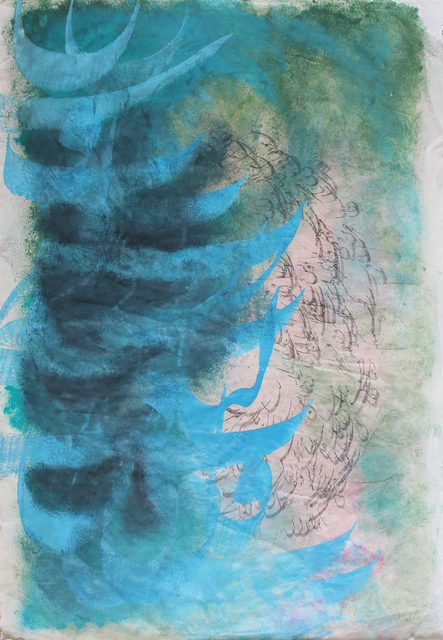
âYÄ Bi-Meshkâ is one of Ali Bagheriâs early explorations of calligraphic painting in a devotional context. Built through layers of blue and green, the work was shaped in remembrance of Abbas ibn Ali and the event of Alqama on the day of Ashura.
âBi-Khabarâ is a calligraphic composition on a verse by Rumi, where long sweeping strokes and the continuous movement of the letters extend the poem into an open, flowing visual structure.
âGushe-ye Abruâ is a calligraphic composition on a poem by Hafez, where dense red letterforms and extended strokes transform the verse into a continuous, dynamic visual form.
âCharkh-e Falakâ is a calligraphic composition based on a rubai by Omar Khayyam, where the density and interweaving of letters create a dynamic, intricately connected structure across the page.
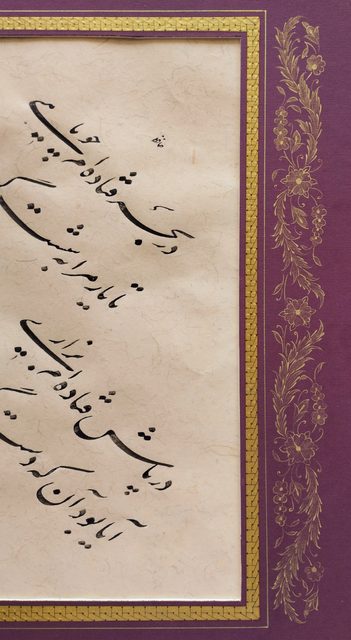
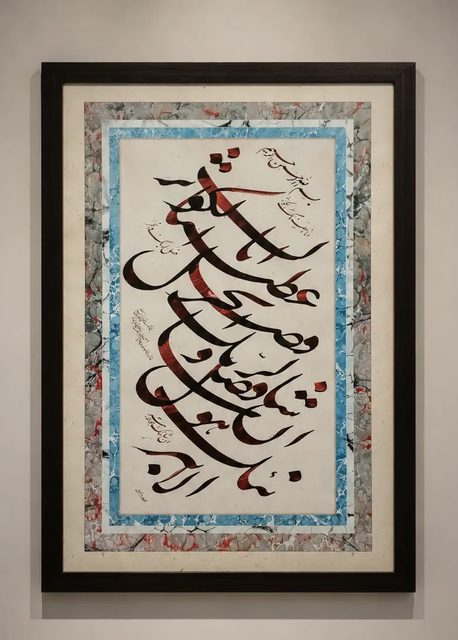
âNorthern Breezeâ is a calligraphic composition based on verses by Hafez of Shiraz. The measured dispersal of the lines and the generous open space between them create a calm, expansive structure across the page.
âRabbanaâ is a calligraphic composition based on verse 10 of Surah Al-Kahf, a prayer for mercy and guidance. The word âRabbanaâ in red becomes the visual focal point of the work.
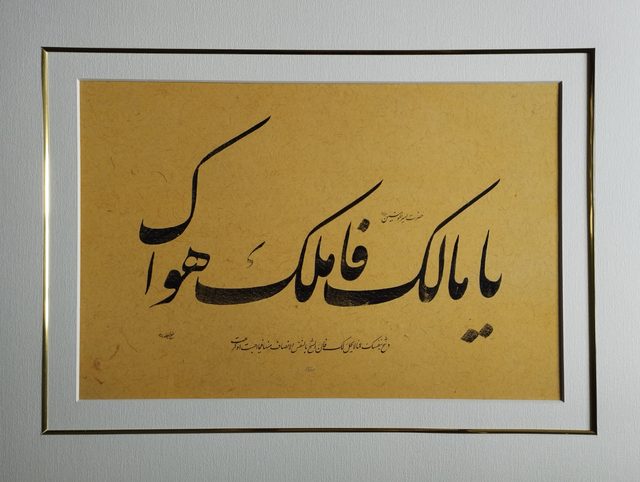
âHusband of al-Batulâ is based on a saying attributed to Ali ibn Abi Talib, honoring the stature of Fatimah al-Zahra through language of reverence and respect. The enlarged central phrase forms the visual anchor of the composition.
âBird of Fortuneâ is a calligraphic composition based on a couplet by Hafez of Shiraz, shaped through broad elongated strokes, large letterforms, and a strong vertical movement across the page.
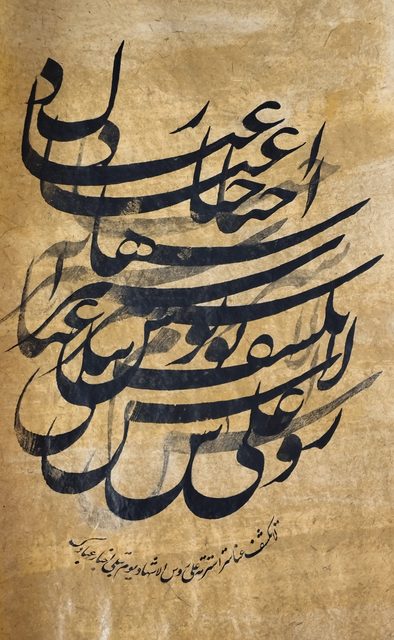
âKawtharâ is a composition based on the verses of Surah Al-Kawthar. It draws on the visual atmosphere of siyah-mashq while preserving the legibility of the text. Large overlapping letters form the centre of the composition, and the verses continue along the lower part of the page.